Category: UPDATED BLOGS

  • How to Access the Central Bank of Nigeria Non-oil Export Fund
    How to Access the Central Bank of Nigeria Non-oil Export Fund
    How to Access the Central Bank of Nigeria Non-oil Export Fund
    The Central Bank of Nigeria (CBN) has issued a guideline to access its Non-Oil Export Stimulation Facility (NESF). The fund was introduced to diversify the revenue base of the economy and to expedite the growth and development of the nation’s non-oil export sector.

    This was disclosed in a document published on the apex bank’s website. The facility, according to the document, will help redress the declining export financing and reposition the sector to increase its contribution to economic
    development.

    Objectives of the CBN Non-oil Export Fund

    * Improve access of exporters to concessionary finance to expand and diversify the non-oil export baskets;

    * Attract new investments and encourage re-investments in value-added non-oil exports production and non-traditional exports;

    * Shore up non-oil export sector productivity and create more jobs;

    *Support export-oriented companies to upscale and expand their export operations as well as capabilities; and
    * Broaden the scope of export financing instruments.

    Who qualifies for the fund?

    * Firms that are duly incorporated in Nigeria under the Companies and Allied Matters Act (CAMA) and have verifiable export off-take contract(s).

    * Satisfactory credit reports from at least two Credit Bureaux in line with the provisions of CBN Circular BSD/DIR/GEN/CIR/04/014 dated April 30, 2010.

    * All applications shall be in compliance with CBN circulars BSD/DIR/GEN/LAB/07/015 and
    BSD/DIR/GENLAB/07/034 on “Prohibition of Loan Defaulters from Further Access to Credit Facilities in the Nigerian banking System” and “Guidelines for Processing Requests from DMBs to Extend New/Additional Credit Facilities to Loan Defaulters and AMCON Obligors” dated June 30, 2014 and October 10, 2014, respectively.

    Eligible Transactions

    * Export of goods processed or manufactured in Nigeria;

    * Export of commodities and services, which are allowed under the laws of Nigeria and do not violate the principles of non-interest banking and finance;

    * Imports of plant & machinery, spare parts, and packaging materials, required for export-oriented production that cannot be sourced locally;

    * Resuscitation, expansion, modernization, and technology upgrade of non-oil export industries;

    * Export value chain support services such as transportation, warehousing and
    quality assurance infrastructure;

    * Working capital/stocking facility; and


    Participating Financial Institutions (PFIs)

    * Non-Interest Banks (NIBs).
    * Non-Interest Development Finance Institutions (NI-DFIs).

    Features of the NESF

    * Financing Limit Term financings under the Facility shall not exceed 70% of verifiable total cost of the project subject to a maximum of ₦5,000,000,000.00.

    Tenor

    The NESF shall have a tenor of up to 10 years and shall not exceed the 31st December 2027.

    Working capital/stocking facility shall be for one year. Where applicable, the facility can be rolled-over twice on a reducing balance basis of 33.3% of the original amount.

    Repayment

    Repayments of principal and return shall be quarterly and in accordance with the agreed repayment schedule.

    Moratorium

    * Moratorium shall be project-specific and shall not exceed two (2) years.

    * In case of construction, additional moratorium of up to one (1) year may be allowed, subject to approval by the CBN.

    * Rates of Return: The Facility shall be granted at an all-inclusive rate of return of 9% per annum.


    Application Procedures

    A PFI shall submit an application to CBN on behalf of its customer in the prescribed format.

    In the case of financing syndication, the lead bank shall submit an application on behalf of other banks. All correspondence with respect to the application shall be with the lead
    bank.

    Each request for a facility is to be accompanied by the following documents:
    a) Written request from the project promoter to a PFI seeking financing under the NESF.

    b) Completed application form.

    c) Certified true copies of documents on business incorporation.

    d) Three (3) years tax clearance certificate.

    e) Audited statement of accounts for the last three (3) years (where applicable) or the most recent management account for companies less than three (3) years in
    operations.

    f) Feasibility study/ business plan of the project.

    g) Relevant permits/ licenses/ approvals (where applicable).

    h) Verifiable export orders/ contracts or other export agreement and arrangements/ commitments.

    See details of the guidelines here

  • Importer of Record Services in Nigeria

    Importer of Record Services in Nigeria

    Importer of Record Services in Nigeria

    Industrial Renaissance provides overseas companies and multinationals with a full importer of record services in Nigeria through which the team does the following:

    • Carry out a full legal compliance assessment;
    • Identify Nigerian import permits, licenses or compliance requirements;
    • Obtain necessary documentation, import licenses and permits as required in Nigeria;
    • Prepare filings to the Nigerian Customs, tax authorities and other relevant government agencies;
    • Pay the assessed import duties and taxes on clients’ behalf on the goods imported;
    • Provide storage and warehousing services in Nigeria, if required by client;
    • Provide all local support required to clear shipments;
    • Perform the last-mile delivery to the end user in Nigeria.


    TRANSACTIONS THAT REQUIRE IMPORTER OF RECORD SERVICES IN NIGERIA

    The following transactions require importer of record services in Nigeria:

    • Shipping of consumer products, pharmaceutical products, industrial equipment, service parts, etc. to a Nigerian branch or representative office in Nigeria that is not registered for tax purposes in Nigeria;
    • Shipments to customers in Nigeria who do not have import permits in Nigeria.


    ADVANTAGES AND BENEFITS:

    1. Industrial Renaissance Importer of Record (IOR) services save clients the costs of establishing legal entities in Nigeria, as well as the costs of rent or acquisition of office space and warehouse, staff salary, taxes, pensions, hardship allowances, etc.
    2. We performs compliance assessment to define import restrictions (import licenses, import permits, and certification requirements), as well as acquisition process and timeline for permits and certification, customs taxes, duties and charges.

    If your company doesn’t have a physical presence in the Nigeria, this can cause you many unwanted complications and expenses. Importer of Record services as provided by Industrial Renaissance Ltd. can offer representation as your company’s officially recognized legal entity in Nigeria.

    For enquiries on Importer of Record Services in Nigeria, please, contact a member of our team directly, WhatsApp +234 818 701 9206, or email at invest@indusren.com.

  • Nigeria: African Development Bank approves US$100 million for expansion of fertilizer production

    Nigeria: African Development Bank approves US$100 million for expansion of fertilizer production

    NIGERIA: AFRICAN DEVELOPMENT BANK APPROVES US$100 MILLION FOR EXPANSION OF FERTILIZER PRODUCTION

    The African Development Bank has approved US$100 million senior loan to Nigerian firm, Indorama Eleme Fertilizer & Chemicals Limited, to support the company’s plans to double its fertilizer production from 1.4 million tons of urea to 2.8 million tons per annum.

    The Bank’s intervention follows a previous loan extended to Indorama Fertilizer in 2013 for the commissioning of another urea fertilizer plant with a production capacity of 1.4 million tons per annum. The completion and exploitation of that plant in 2016 helped turn Nigeria from a net fertilizer importer to a self-sufficient producer, and now a net exporter of fertilizer. In 2017, 700, 000 tons of urea were exported to West Africa and North and South American markets. Production from the new plant will predominantly target export markets.

    The project will also address the problem of inadequate fertilizer utilization, which is considered one of the principal constraints to agricultural growth and development in Nigeria, and the entire African continent.

    “This Project will build upon the success of Train-I in increasing the domestic supply of urea fertilizer in Nigeria, making it easily available and leading to cheaper prices for the Nigerian farmer,” said Abdu Mukhtar, Director for Industrial and Trade Development at the African Development Bank. “It will also help further address labor issues in a local region wracked by poverty, inequality and political tension by creating high paying technical jobs and will count towards climate change abatement by reducing amounts of flared gas.”

    Fertilizer production support is well aligned with regional and national priorities, as well as the Bank’s assistance strategy in Nigeria, and is an important step towards the Bank’s goal of radically transforming Africa’s agriculture sector and making the continent self-sufficient in food.

    Despite a large population of farmers, Nigeria spends at least US$6 billion per year on food imports. A contributing factor to low domestic crop yields is low consumption levels of fertilizer in Nigeria-and indeed Africa as a whole, which averages only 10-15% of global levels.

    The project supports the medium term economic recovery and growth plan of the Government of Nigeria and the Bank’s regional strategy to link regional markets in West Africa. 20% of the urea exports will be made to South Africa and West Africa (Cote D’Ivoire & Senegal). Regional integration will be further strengthened by the export of increased agriculture production in Nigeria.

    The Indorama Eleme Complex has been a success story of public private partnerships in Nigeria, with several benefits including import substitution of raw materials to over 450 downstream industries; increased crop yields of over 30%; training of 200,000 farmers on the proper use of fertilizers expected to reach 2 million by 2021; creation of 50,000 jobs, and an annual contribution of US$2 billion to Nigeria’s GDP. The estimated US$1.1 billion cost of the Project is to be financed with equity of US$100 million and debt finance of US$1billion which will be provided by development finance institutions. All the financiers have now provided their final Board approvals for the project.

    SOURCE: African Development Bank


  • Op-Ed: Why the world should follow China and invest in Africa ’s future

    Op-Ed: Why the world should follow China and invest in Africa ’s future

    OP-ED: WHY THE WORLD SHOULD FOLLOW CHINA AND INVEST IN AFRICA’S FUTURE

    Hendrik du Toit, co-CEO of Investec Group argues African economies have been resilient and the continent’s long-term growth story – particularly green growth – remains compelling to invest in Africa.

    By Hendrik du Toit is co-CEO of Investec Group

    I remember a time, over 20 years ago now, when virtually no professionally-managed capital moved across borders in Africa. When aid and corruption drove the investment narrative. When Africa was called the “hopeless continent”. When sustainability wasn’t even part of an investor’s vocabulary. We’ve come a long way.

    The millennium heralded rapid growth across the African continent. At around 3%, default rates on African infrastructure are some of the lowest in the world. Africa has the fastest growing population and is seeing a wave of innovation and entrepreneurship sweeping across the continent. The latter is strongly enabled by mobile phone technology which has directly facilitated a financing revolution. Off-grid solar panel installations have proliferated, purchased via monthly payments made on cell phones, through companies like Mobisol and M-Kopa.

    Of course, global and domestic events, including the 2014 oil-price shock hit major economies especially hard; we’ve seen recent declines in performance in Angola, Nigeria, and my home country of South Africa. But overall, African economies have been resilient and the continent’s long-term growth story – particularly green growth – remains compelling.

    Billions of dollars have been invested in renewable energy across the continent. Late last year, Nigeria issued a N10.69 billion (US$29 million) green bond to fund local solar and forestry projects. This is Africa’s first sovereign green bond – one of only a handful in the world (alongside China, France, Poland, Fiji and Indonesia). Kenya will soon follow.

    The World Bank also estimates that aggregate growth in Sub-Saharan Africa for 2018 will be around 3.2%, up from 2.4% last year. The continent is expected to host six of the 10-fastest growing economies of the world in 2018, while traditional assets under management (including pension and mutual funds) are forecast to grow to around US$1.1 trillion by 2020, up from US$634billion in 2014.

    In short, Africa is very much “open for business”, particularly for investors who are chasing yield and diversification. China’s got the message, committing to US$60 billion in new investment in major capital projects across Africa. Indeed, China has been an integral part of Africa’s rejuvenation by becoming Africa’s largest export destination, its largest source of imports and more recently its largest source capital, both equity and debt.

    These are positive signals, but a lot more capital is still needed, particularly from large institutional investors. Estimates put the African infrastructure deficit at around US$90 billion every year for the next decade. Across the continent, 620 million people still don’t have electricity; 319 million people are living without access to reliable drinking water; and only 34% have road access.

    There are a few things which can help. Firstly, “blending” public and private capital can improve an asset’s risk-return profile, so vehicles which use development money to mitigate investor risks can attract much needed commercial investment. Some of these vehicles – like The Currency Exchange, which offers FX hedging in emerging markets – have successfully mobilised billions of dollars of private money for African projects.

    Another example is the Emerging Africa Infrastructure Fund (EAIF) with projects ranging from water supply in Rwanda to solar power in Uganda. The EAIF is part of the Private Infrastructure Development Group (with equity from governments including the UK, Sweden, Germany and the Netherlands) and recently announced that it had attracted its first commercial lender in global insurer Allianz, as part of a $385 million fund-raising round. This investment signals a shift in appetite for African risk from institutional investors. These vehicles need to be scaled and replicated.

    Secondly, to attract investment for high-impact assets like climate-resilient, sustainable infrastructure, development banks need to be more effective at crowding in private capital using instruments like political risk insurance and guarantees, not crowding them out. At best, the multilateral development banks (MDBs) mobilise less than $1 of private capital for every public dollar across their portfolios. They should target much higher mobilisation ratios and sharply increase their share of private sector activities (which currently only account for around 30% of MDB activities).

    Thirdly, frontier countries must compete for investor dollars by making it easier for the private sector to do business. This requires strong, political leadership, depth in local capital markets, the right legal framework and transparent policies. In particular, local policies should support regional simplicity to facilitate cross-border operations that can generate scale. For example, a very important, but much-overlooked regulatory amendment recently saw the amount that South African retirement funds could invest into the rest of Africa increase from 5% to 10%. It’s only when public markets are deep enough for strong exits that we’ll see bigger and bigger deals happening.

    Most importantly, if we really want to see sustainable growth and the associated economic and financial returns, the investment community needs to lead. We need to take a leaf out of China’s book, embracing African infrastructure as an investment opportunity, taking advantage of risk mitigation tools and addressing the huge gap in risk perception between emerging and developed markets. We can also use our investing power to drive value for shareholders while prioritising “green”, sustainable development (e.g. through initiatives like Climate Action 100+).

    This is all part of how we move away from an “aid-based” narrative to one of business and investment. It is also how we can provide the platform for economic inclusion of the world’s most youthful and fastest growing labour force. I dream of a future shaped by bold and wise investment decisions.


    SOURCE: CNBC Africa


  • Importer of Record (IOR) in Nigeria

    Importer of Record (IOR) in Nigeria

    Importer of Record (IOR) in Nigeria

    IMPORTER OF RECORD (IOR) IN NIGERIA

    Importer of Record in Nigeria (IOR) is the entity that assumes the responsibility for legally importing goods into the Nigerian territory, paying duties, tariffs, and fees, and ensuring they are properly valued and documented.

    Industrial Renaissance provides a comprehensive range of importer of record services in Nigeria and freight forwarding solutions to ensure your exports to Nigeria are successfully managed – from ordering to storage, delivery and waste management. We will manage the entire process to get your exports delivered to the actual recipient, meaning you save cost and time in organizing exports to Nigeria.

    WHO IS AN IMPORTER OF RECORD (IOR) IN NIGERIA?

    An importer of record (IOR) in Nigeria is an entity whose responsibility is to:

    • Carry out a full legal compliance assessment of the cargoes sought to be imported into Nigeria;
    • Identify import permits, licenses or compliance requirements in Nigeria;
    • Obtain necessary documentation, import licenses and permits as required;
    • Prepare filings to the Nigerian Customs, tax authorities and other relevant government agencies;
    • Pay the assessed import duties and taxes on the exporter’s behalf on the goods imported into Nigeria;
    • Provide storage and warehousing services in Nigeria, if required by the client;
    • Provide all local support required to clear shipments;
    • Perform the last-mile delivery to the end user in Nigeria.

    Industrial Renaissance Ltd is an importer of record (IOR) in Nigeria (the largest market in Africa), for enquires contact a member of the Industrial Renaissance team directly, WhatsApp +234 818 701 9206, or email at invest@indusren.com.

  • Nigeria’s Lekki Free Trade Zone Gains N4.55tr in Investment Inflow

    Nigeria’s Lekki Free Trade Zone Gains N4.55tr in Investment Inflow

    Lagos State Government of Nigeria has said investment in the Lekki Free Trade Zone has hit about N4.55 trillion.

    Commissioner for Commerce, Industry and Cooperatives, Rotimi Ogunleye told journalists yesterday in Alausa that the investment includes N3.35 trillion ($11 billion) from Dangote Group and N1.2 trillion ($4billion) from other investors.

    Ogunleye said about 116 investors had so far registered with the Lekki Free Trade Zone.

    According to him, while some factories are currently under construction, 100 investors have signified their intention to register and situate their business within the zone.

    “The Lekki Free Zone remains a landmark industrial project for the Lagos State government. The strategic partnership between the Lagos State government and the China-Africa Lekki Investment Limited (CALIL) in the Lekki Free Zone Development Company (LFZDC) is a testament to the undying resolve of the state government to ensure sustainable industrialisation of the state that would translate to improved job and wealth creation as well as economic growth through the attraction of local and foreign direct investments.

    “I am very happy to inform you that 116 investors have so far registered with LFZ. “While some factories are currently under construction, 100 investors have also signified their intention to register and situate their business within the zone,” he said.

    The commissioner explained that during the period under review, the Lagos State government further released a sum of N698,478,850 to the joint ventures as part of the state’ equity contribution.

    “This is part of the effort to ensure the speedy development of the free zone and honour the state’s obligation to counterpart funding of the project,” he added.

    Source: The Nation Online

  • Shandong Wuzgen Group Targets Akwa Ibom State – Nigeria for Plantation Development

    Shandong Wuzgen Group Targets Akwa Ibom State – Nigeria for Plantation Development

    Akwa Ibom State government of Nigeria says a technology-based agricultural firm, Shandong Wuzgen Group, has arrived in the state to invest in the agric sector.

    Commissioner for Agriculture and Natural Resources, Dr. Charles Inyang, who spoke after an interaction between the directors of the firm and Governor Udom Emmanuel, said the state government was determined to strengthen the agriculture sector through mechanised farming and ensure availability and affordability of food.

    According to a statement by the state on Tuesday, the leader of the Shandong Wuzgen Group, Mr. Xiwen, expressed his delight at the investment opportunities in the state, while identifying areas of intended collaboration with the state to include large scale cassava plantation, maize and cashew cultivation.

    He said, “As a large scale agricultural manufacturing organisation, we are targeting Akwa Ibom as the gateway to commercial farming in Nigeria, and we have come to confer with the governor and seek his support to enable us to partner in agricultural production.

    “We also engage in the manufacturing of haulage vehicles from five to 30 tonnes, tricycles, ambulances, storage facilities and recycling of waste for industrial and agricultural use.”

    The business consultant to the Group, Mr. Abdulraman Abdukari, said the degree of partnership would be a symbiotic one as the state government would provide the land and manpower, with Shandong Group providing the technology and market for the produce.

    Source: PUNCH

  • Local miners to benefit from N30bn intervention fund

    Local miners to benefit from N30bn intervention fund

    Operators in Nigeria’s mining industry will benefit from the N30bn Mining Intervention Fund approved by the Federal Executive Council, the Minister of Mines and Steel Development, Dr. Kayode Fayemi, has said.

    Fayemi said this while inspecting quarrying facilities at CIBI Nigeria Limited’s quarry site in Buruku, Kaduna State, according to a statement issued in Abuja on Wednesday by the Special Assistant (Media) to the Minister, Mr. Olayinka Oyebode.

    The minister also disclosed that the miners would also benefit from a mining loan being sourced from the World Bank.

    He said the ministry had entered into a partnership with the Bank of Industry to offer loan facilities from the intervention funds to serious operators who were already producing and who required assistance to increase the scope of their operation.

    He stated that companies engaged in the production of quality tiles would benefit from the fund in order to help increase their production, compete favourably, and help reduce the nation’s dependence on imported tiles.

    “We are working with the BoI to disburse the loans as soon as the intervention funds are released to operators,” Fayemi said.

    He said the companies like CIBI Nigeria Limited would have been able to produce more than 200,000 square metres of tiles it was currently producing annually from dimension stones, if adequate resources, including finance, equipment and others were available.

    According to the minister, Nigeria needs about four million square metres of tiles annually, adding that all the local tile producers could only come up with less than a million annually.

    He stressed the need to support local operators as captured in the Mining Road Map drawn up by the ministry.

    The Chairman, SIBI Nigeria Limited, Mr. Nuhu Wya, urged the government to support its project, adding that there was increased demand that it had the capacity to meet.

    Source: PUNCH

  • OPEN FOR BUSINESS: Nigeria Eases Immigration Processes For Business Travellers, Tourists To Boost Economy

    OPEN FOR BUSINESS: Nigeria Eases Immigration Processes For Business Travellers, Tourists To Boost Economy

    The Federal Government of Nigeria has reviewed the visa processes for foreigners who wish to visit Nigeria for business and tourism purposes, with a view to removing bureaucratic bottleneck and encouraging business travellers and tourists, thus giving a boost to the economy.

    In a statement issued in Lagos on Sunday, the Minister of Information and Culture, Alhaji Lai Mohammed, said the measures were part of the action plan for the ease of doing business as well as efforts to boost tourism, within the overall context of the Administration’s economic diversification agenda.

    ”The Nigeria Immigration Service (NIS) has reviewed the requirements for Nigerian visas to make them more customer friendly, and details of this review are available on the NIS official website, www.immigration.gov.ng.Types of visas currently reviewed include Visa on Arrival (VoA) processes, Business Visas, Tourist Visas and Transit Visas,” the Minister said.

    Alhaji Mohammed explained that Business Visas are available for foreign travellers who wish to travel to Nigeria for Meetings, Conferences, Seminars, Contract Negotiation, Marketing, Sales, Purchase and distribution of Nigerian Goods, Trade Fairs, Job Interviews, Training of Nigerians, Emergency/Relief work, Crew members, Staff of NGOs, Staff of INGOs, Researchers and Musical Concerts.

    He said Tourist Visas are also available to foreign travelers who wish to visit Nigeria for the purpose of tourism or to visit family and friends while Nigeria Visa on Arrival is a class of short visit visa issued at the port of entry, and it is available to frequently-travelled High-Net-Worth Investors and intending visitors who may not be able to obtain visa at the Nigerian Missions/Embassies in their countries of residence due to the absence of a Nigerian mission in those countries or exigencies of urgent business travels.

    The Minister said other actions that have been taken by the NIS for the ease of doing business and facilitation of travelling for Nigerians and foreigners alike include the harmonization of multiplicity of Airport Arrival and Departure Form/Cards into a single form for all agencies of government to save foreign visitors from the current frustrating practice of filling 3 different forms or more and the decentralization of Immigration services to the State Commands

    “Re-issuance of passports for change of names due to marital reasons or lost cases have been decentralized to all State Commands and Foreign Missions to save passport holders from additional costs and inconvenience of travelling to the Service Headquarters in Abuja, while additional 28 offices have been opened for issuance of Residence Permits in Nigeria, bringing the issuance of Combined Expatriate Residence Permit And Aliens Cards (CERPAC) closer to the doorstep of employers of expatriates at all 36 states and FCT,” he said.

    Alhaji Mohammed said the measures by NIS fit perfectly into the 60-day national action plan for ease of doing business in Nigeria that was approved recently by the Presidential Enabling Business Environment Council (PEBEC), as well as the Administration’s efforts to boost international tourism.

    Segun Adeyemi
    SA to Hon Minister of Information and Culture
    Lagos

    26 Feb 2017

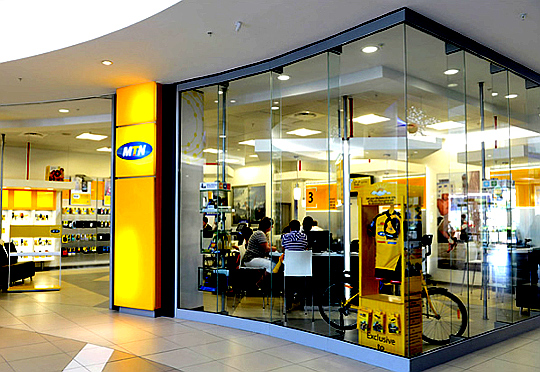
  • MTN Nigeria edges closer to 2017 stock market listing

    MTN Nigeria edges closer to 2017 stock market listing

    The Nigerian Stock Exchange (NSE) is working with MTN to list the company’s local arm by the end of 2017, Reuters reported.

    Speaking at a business conference yesterday, NSE CEO Oscar Onyema said the “pressure on MTN has never been higher to list,” adding the company was working with officials to confirm the details, the news outlet reported.

    MTN is Nigeria’s largest telecoms operator, but faced numerous issues with the country’s authorities during the past two years, leading to revelations directors were discussing quitting the market if the “endless hostilities” it faced continued.

    The company voiced its intent to list its Nigerian business in June, following an agreement to pay a reduced fine of $1.67 billion to the country’s Government to settle a long-running row related to unregistered SIM cards. Three months later the company was accused by officials of illegally transferring almost $14 billion out of Nigeria over the course of ten years, allegations strongly denied by the operator.

    Despite these problems, MTN Nigeria looks set to list this year, subject to “market conditions”. The company appointed Stanbic IBTC Capital, Standard Bank of South Africa and Standard Advisory London, and Citigroup Global Markets, as joint transaction advisors and global coordinators.

    SOURCE: NIGERIA BUSINESS COMMUNITIES